I only have a few bird photos left for my next post, from the ones we saw on our walk (April 25th). I will be sharing it next week sometime, and that will be my last until our next visit out there. It will also include scenery, trees and fauna, and a frog. In the meantime...
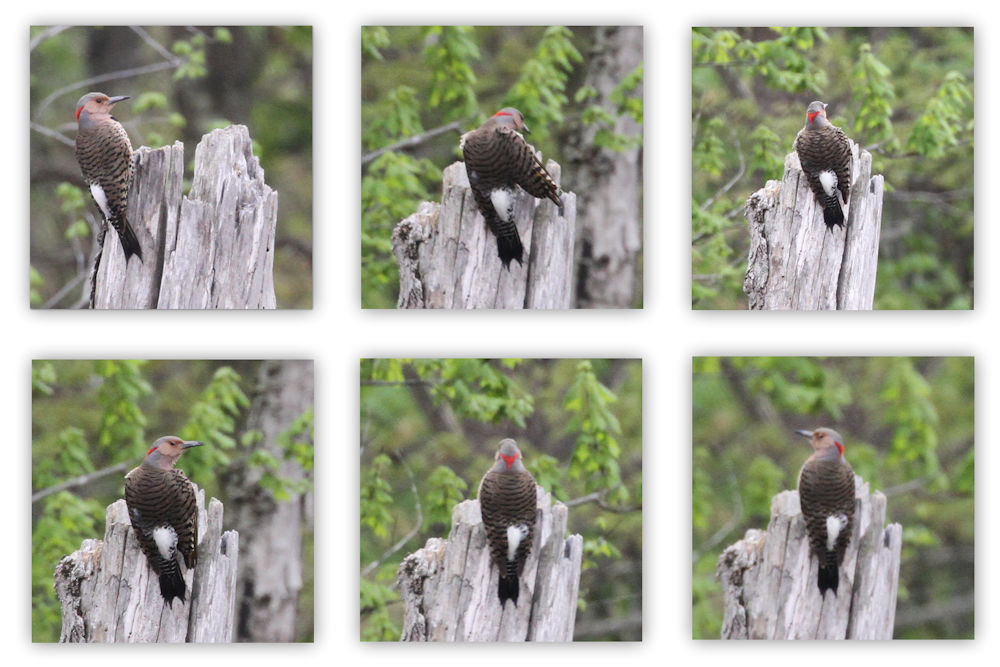
not too far away from where we saw our hawk from yesterday's post, we spotted another bird perched on top of an old tree trunk. I have seen enough photos, along with a few sightings, to know that this was a Northern Flicker. I don't get to see them but rarely, so this too was a very enjoyable moment. Northern Flickers (Colaptes auratus) are native to North America and Canada, are migratory birds and, as you may already know, belong to the woodpecker family. It is one of the
only brownish woodpeckers and as it flies it can be recognized by a large white
patch on its derriere, and the yellow under-surface of wings and tail. It has a
black crescent on its chest and a patch of red at the back of its head. I wasn't actually sure what that white patch was before, and I learned something new about this particular feathered friend. Added note: with a little more research I found this website that gives us a reason as to why they have this white patch. 
North America has two easily distinguished races of Northern Flickers: the yellow-shafted form of the East, which occurs into Texas and the Great Plains, and the red-shafted form of the West. The key difference is the color of the flight-feather shafts, which are either a lemon yellow or a rosy red. Yellow-shafted forms have tan faces and gray crowns, and a red crescent on the nape. You can see an article here on the differences. Males have a black mustache stripe. Red-shafted forms have a gray face, brown crown, and no nape crescent, with males showing a red mustache stripe. Hybrids do occur and are common at the edges of these two groups’ ranges.
The male has a black streak along each side of the throat, while the female doesn't have the black throat streaks, and the black crescent on the breast is smaller. Females are duller in color than the males. So, I am guessing the flicker we saw today is a female? I also read that Virginia only hosts one flicker species, the Yellow-shafted Northern Flicker which we mentioned above as being seen in the east.
You might see a woodpecker walking on the lawn and if you are in the know, will recognize it as a flicker. This is because they are also the only species that are ground feeders. They forage along grassy areas in search of ants and other small insects.
I think she was poking into the top of this old tree for a few tasty insects.
Moving on from our female Yellow-shafted Northern Flicker...
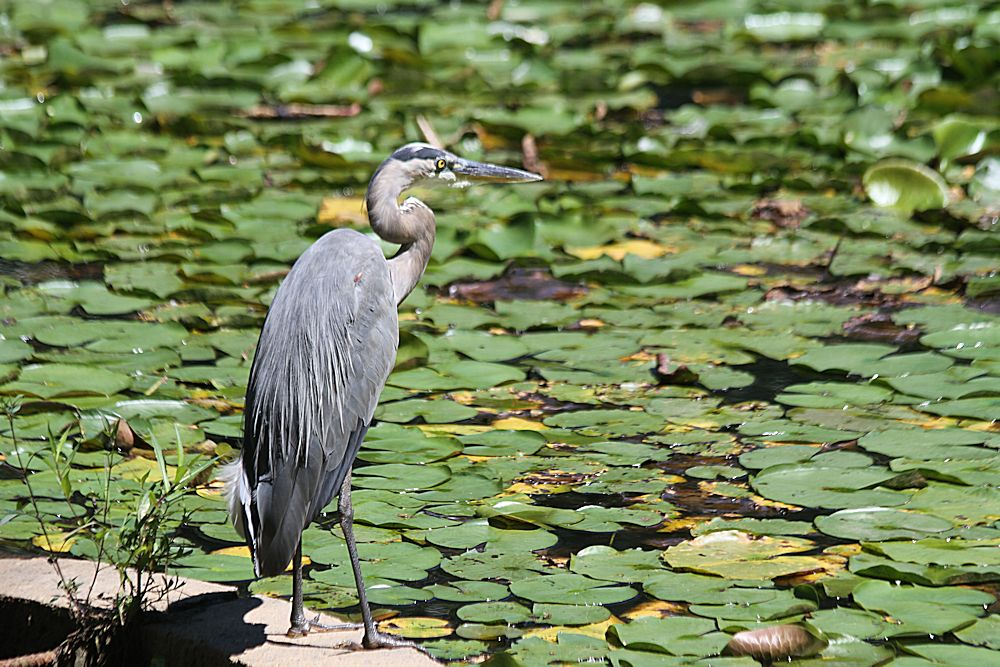
It inhabits much of the Americas, and this species is found from southern California and in the south-eastern part of the US to Central Brazil and Peru. Outside of the mating season it may travel as far to the north as Canada. Despite the Little Blue heron often living near saltwater, it is mainly an inland bird. It prefers freshwater areas like ponds, lakes, swamps, marshes, and lagoons, but sometimes also occupies flooded and dry grasslands, and marine coastlines. It feeds during the day, when its long legs allow it to wade in the water and walk slowly to find prey, often standing motionless or retracing its steps.
I saw this bird for the first time in Florida several years ago. We had gone on a boat ride to see the pelicans and other herons, egrets and storks also. At night they flew to Pelican Island to roost, and several birds did in fact fly over us as we headed that way. The captain of the boat pointed out this little blue bird in the shallows. It was the most comical sight. Rather than standing motionless, the bird looked like it was dancing, albeit daintily, running through the water with its wings outspread. It was using its feet to rake the water to stir up the fish. Its spread wings were used for shade so that it could see the fish that would normally be hidden by harsh sunlight. This is what the captain told us and I was enchanted with our first introduction to the Little Blue Heron. I have never forgotten that first experience.
I am not sure what kind of duck this is but she was swimming with her family, two sweet little babies.
If you know what kind they are, please let me know. We'll just call them the Cute Duck Family right now.
Thats all for today.
Thanks for looking and have a great weekend!