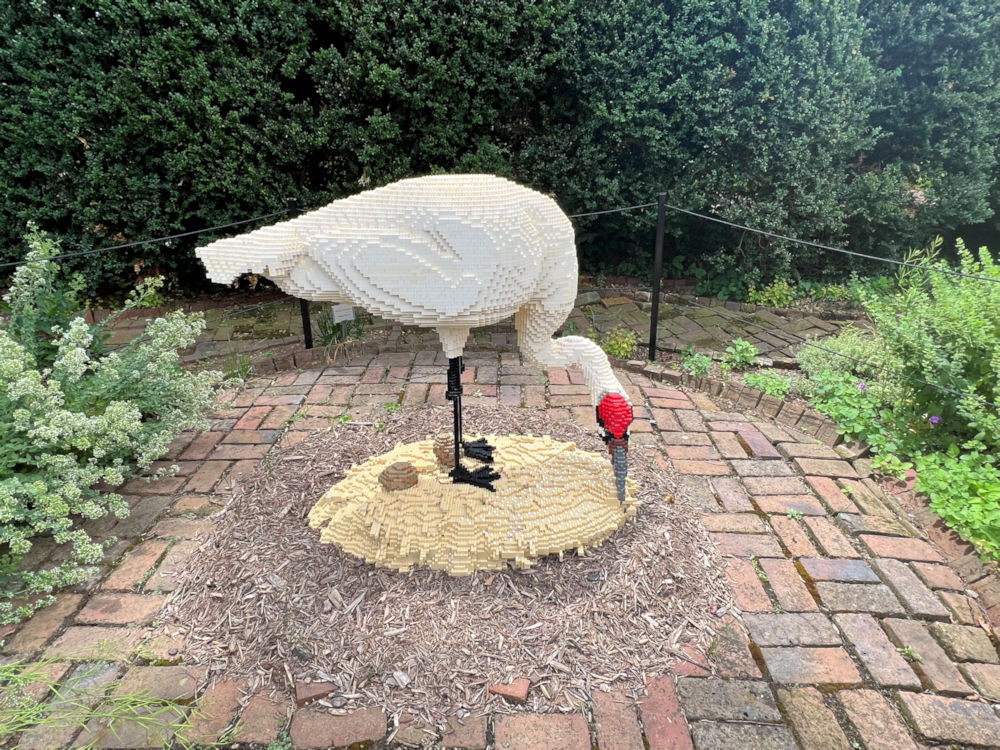
Continuing on from previous posts, I am sharing other parts of the garden. We were there to see the Lego exhibit which I shared here and here. But first we stopped inside the museum itself. We didn't stay long, just enough to get the tickets, and to browse around the gift shop. Our focus was on the garden.
All up and down the hall there were paintings on the walls, plus this crow sculpture. It would be a wonderful addition to our garden art. But no, I didn’t enquire and wasn’t even sure if it was for sale. I am rather partial to crows and always welcome their visits.
The flowers below were in flower beds near the front door. Below are Purple Coneflower which I described in greater detail in my post from Green Spring Gardens.
You can click here if you want a refresher on them. It is the fourth photo down on that page.
Next, Gregg is a bit of a blur in the background. I am standing next to the Southern globethistle, botanical name Echinops ritro. It is native to southern and eastern Europe and western Asia. A drought tolerant plant that can handle temperatures down to -4 degrees. F.
Southern globethistle's attract Goldfinches and similar bird species. They often struggle in the winter to find food, but this plant produces an abundance of seeds late in the season and helps keep them well fed.
The red barn is situated between the museum and the garden. I am not sure if this area is just for maintenance workers, or whether for some other activities. For garden classes perhaps. I really should ask next time.
I have seen the following in other gardens. It goes by the name of Klip dagga, great name! Also known as Lion's-Tail, Christmas candlestick and Bald bush, with a botanical name of Leonotis nepetifolia. (That sounds like a spell in a Harry Potter movie!) The ones I have seen in another garden grow above my head (I am 5 ft. 6 in) and these can reach 10 feet tall. A native of tropical Africa and southern India, it is a member of the mint family, and its petals range from purple to orange to red. It is a popular ornamental around the world.

In the photo below you can see the Klip dagga off center left and also on the right in the background of the flower bed, standing tall. This is a real pretty area and the flowers grown here remind me of an English Garden. My Dad's was very similar to this but with different flowers. Dad always loved his garden but even more time was devoted after he retired. There was always a profusion of flowers, bought from local nurseries or given to him by friends, cuttings from their gardens. They often used to exchange flowers. Dad asked Mum what she would like and go on from there. Her favorites were roses, Sweet Peas and Carnations, but there were other types of flowers planted over the years. I remember a beautiful clump of wild primroses. She loved those.

This flowerbed included these pretty blooms identified as Swamp rose mallow. Another I have described before, though it has been quite a while since I saw them. A species of Hibiscus in the Mallow family, it also goes by other names; Crimsoneyed rose-mallow, Rose-mallow and Eastern rose-mallow. Swamp rose mallow prefers full sun but can tolerate partial shade. However, they may get a bit 'leggy'. It is native to southern to eastern North America.

They attract a wide variety of birds because of their trumpet-shaped petals and long stamens. They attract a wide variety of nectar-seeking birds, plus butterflies and bees. Hummingbirds are attracted to their vibrant colors, especially loving shrubs of red, pink and orange. Swamp rose mallow growing closer to wetlands can provide nesting for some birds, particularly red-winged blackbirds. In the winter the flowers go to seed providing food for the blue-winged teal, goldfinch, northern pintail and wood duck. The petals of this plant range from pure white to a rosy color, most of which have deep maroon stamens. It is because hibiscus holds the meaning of mallow, and it is often grown in wetlands and rivers. That's why it is called Swamp rose mallow.

I am always happy to see the Sunflowers. We have here the Common sunflower, but its other names are Annual sunflower and Mirasol. Its botanical name is Helianthus annuus. Sunflowers can be planted in containers or cultivated in the garden. They are easy to care for and they make impressive cut flowers. One very interesting fact I learned, however, is that you should not plant them with beans or potatoes as they are especially susceptible to a chemical exuded by the sunflower's roots and should not be planted near them.
I believe these are ornamental peppers. At least I found very similar ones here at The Spruce.
It is also called the Christmas pepper plant and its botanic name is Capsicum annuum cultivars. They need full sun to provide the energy for producing flowers and colorful fruit. Click on the link above and it will give you a lot of information for growing them. If you are going to eat them, harvest the peppers before the first frost of the fall. Simply use sharp shears or a knife to cut the fruit off the plant, and store in the refrigerator. Use super-hot ornamental peppers very sparingly, chopped up in hot sauces, salsas, omelets, rice and bean dishes and curries. Wear gloves when handling hot peppers. All this information came from the above link.
My last photo for this post is a rather splendid sundial. There is a fascinating history of them at this link. I read that the oldest true sundial, that they know of, is an Egyptian shadow clock made from greenschist and built around 1500 BCE, in Egypt. If you click on the previous link it will show you a picture of a wooden one.
That's all for today. I have enough photos for two more posts and will share them as soon as I can put them together.