I won’t be visiting over the next few days, as I will not have a lot of computer time. I have my posts set up daily, so thanks in advance for leaving any comments. I will catch up with you next week.
This is a repeat share from 2015.

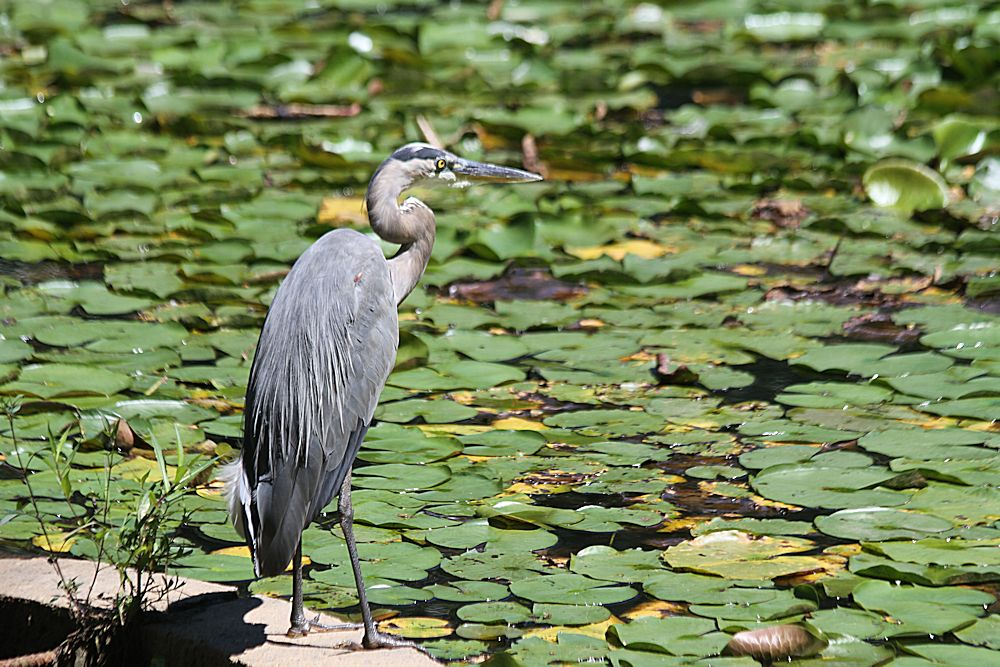
This is the first time we had seen a Great Blue Heron on our walk to one of our favorite spots in the garden. We felt we lucked out to be there at the same time.
He was so focused!
Did you know herons spend 90% of their waking hours stalking for food? There are five subspecies of Great Blue Herons. Their colonies can consist of 500 or more individual nests, with multiple nests per tree built 100 or more feet up in the air. They also will nest on the ground, on bushes, in mangroves, and on structures such as duck blinds, channel markers or artificial nest platforms.
They typically lay 2 to 6 pale bluish eggs, measuring around 2 x 3 inches. During incubation, the eggs fade to white.
Still focused on catching dinner. Great blue herons can hunt for food during both the daylight hours as well as during the night.
He got tired of waiting at that fishing spot...
as he took off...
and relocated...to the other side of the pond. We left him to continue our walk, having sat on a bench for some time observing him. Nature truly is a marvelous part of our surroundings.

 He was so focused!