Wednesday, June 4, 2025
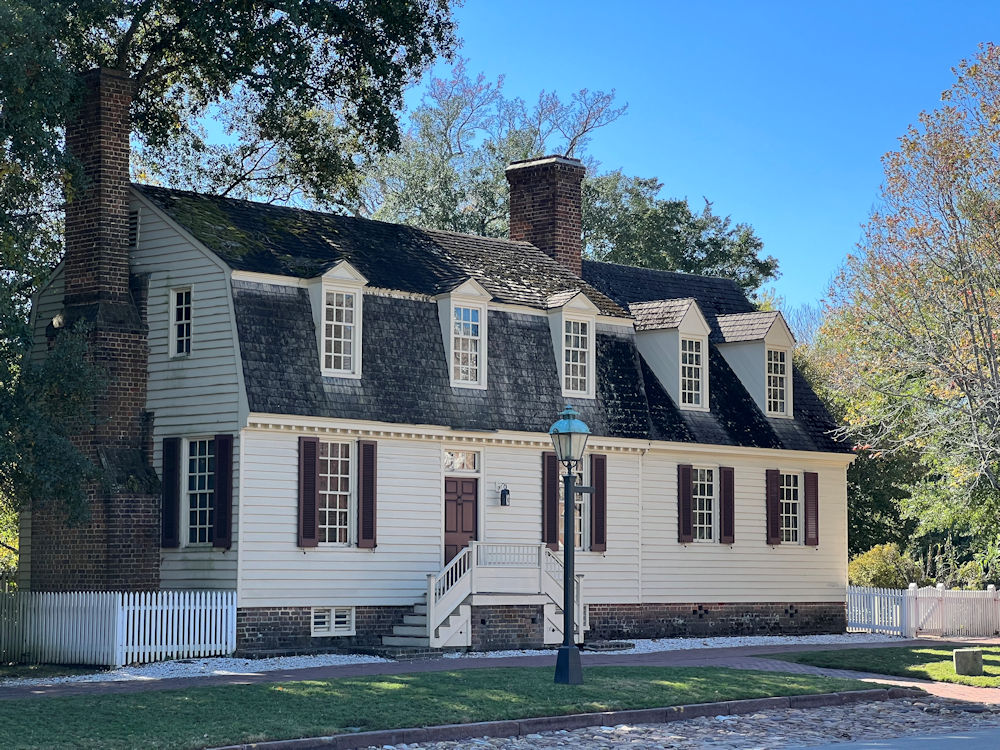
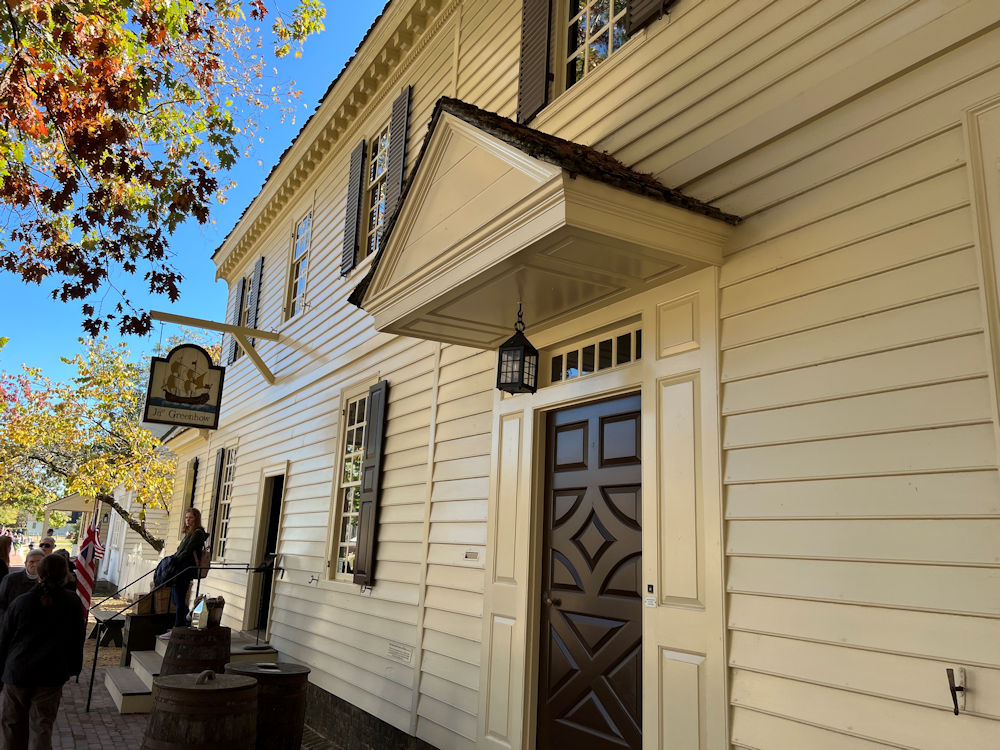
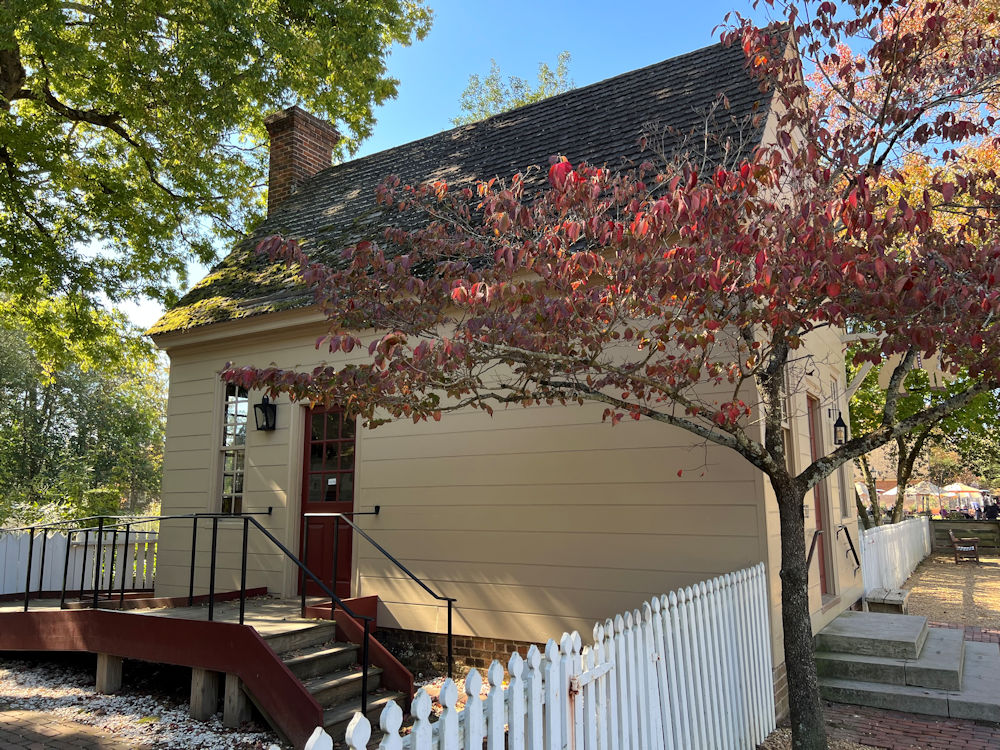
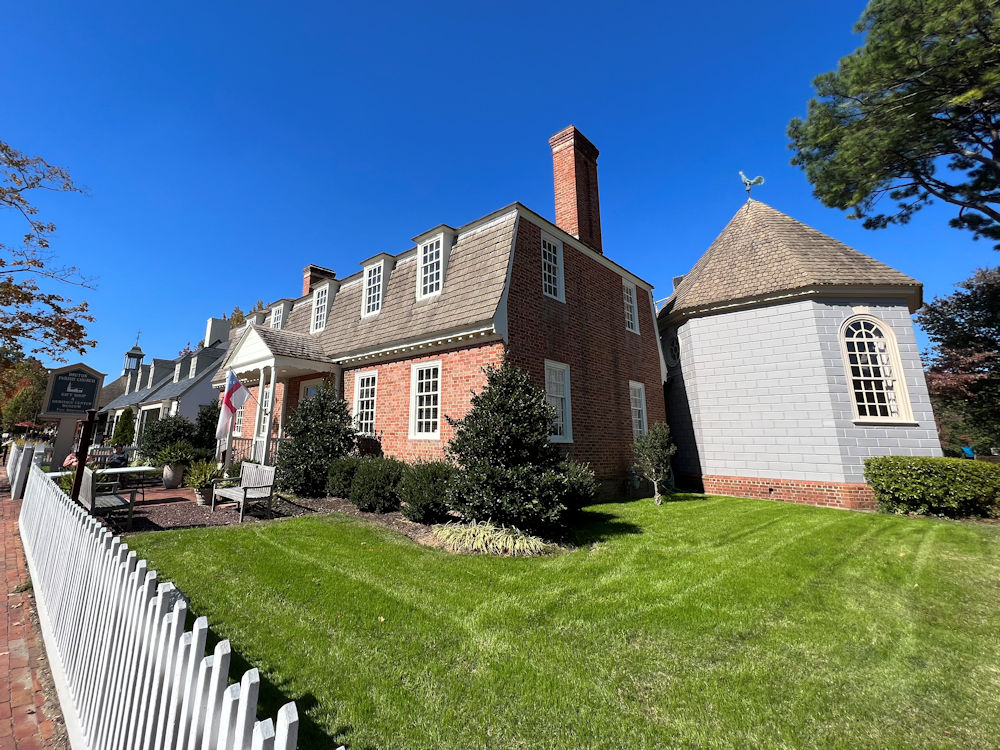
PHOTOS FROM WILLIAMSBURG ON 4-25-25
Wednesday, May 21, 2025
SWARMING BEES IN WILLIAMSBURG
I saw an extraordinary sight when we visited Williamsburg with our family a few weeks ago. They had gone off to explore the town, Gregg was looking for a much-prized parking spot as it was very busy, and I was having my usual sit-down on a bench while waiting for him, enjoying the warmth and sunshine, and people watching.
I don't know what made me look up, maybe it was the sound of them, I don't know.
I raised my head and there they were, literally thousands upon thousands of bees. I think I must have heard them first and I gasped at the sight of them. I couldn't believe what I was looking at. I had never seen anything like it before. A dozen bees at the most on a plant I was photographing. You can click on them to enlarge for better detail.
For some reason I wasn't afraid that they were going to sting me. I was mesmerized and I quickly looked to see if anyone else had noticed them. I couldn't see anyone with their heads turned upwards like I was. I was sitting on my own of course, and everyone else seemed to be busy with their families, small children, dogs, etc. I felt like I was in a world of my own with all those bees putting on the best show. They seemed to be heading in one direction. This went on for at least ten minutes as I followed their movement. It was the most surreal experience I have ever had. It seemed as if they were all only a few feet above my head, probably higher but not so high that I couldn’t get these photos with my cell phone. And then they were gone!
Gregg found the following info online. (He had joined me not long after they had disappeared, and our family an hour later.) It read as follows:
"What you witnessed is almost certainly a mass swarming event, likely involving honeybees, and here's what is probably going on.
Late April in Virginia is peak swarming season for honeybees.
When a hive becomes too crowded, the old queen and about half the worker bees leave to find a new home. This swarm can involve tens of thousands of bees.
The bees swirl in the air (sometimes for 5-15 minutes) as scouts search for a new nesting site. It is dramatic but usually harmless - swarming bees are gorged on honey and less aggressive.
It is a natural, healthy behavior for a thriving hive. Beekeepers actually hope to catch these swarms, as it is a way to grow or start new hives.
A single bee can produce 1 tablespoon of honey in its lifetime.
683 bees fly roughly 32,550 miles to gather 5.93 lbs. of nectar from about 1,185,000 flowers in order to make one 9.5 oz. jar of honey.
(Now, you can take all these little bits of info with a grain of salt as I found them all over the internet. I went to dozens of websites. Once on that curiosity journey, I found it hard to stop.)
Did you know that honey contains a substance that helps the human brain work better?
Did you know that the honey is the ONLY food on earth that can sustain human life alone?
Did you know that a teaspoon of honey is enough to sustain human life for 24 hours?
Did you know that propolis produced by bees is the most powerful natural antibiotic.
What is 'propolis’?
Propolis, also known as "bee glue," is a sticky-like resinous substance produced by honeybees from plant sap, combined with their saliva and beeswax. Bees use propolis to seal cracks in their hives, protect against pathogens and maintain temperature and humidity. Humans have used propolis for various medicinal purposes due to its antimicrobial, antiviral and anti-inflammatory properties.
Historically, propolis has been used for wound healing, treating infections and even as a component in embalming.
It is available as a supplement, ingredient in topical creams and ointments, and in oral products like mouthwashes and throat lozenges.
Propolis may help with various conditions like cold sores, swelling and sores in the mouth, and may even slow blood clotting.
While propolis has shown promising results in research, the claims about its medicinal properties haven't been fully supported by scientific evidence, according to the Cleveland Clinic.
Wednesday, November 9, 2022
LAST OF MY PHOTOS FROM COLONIAL WILLIAMSBURG - OUR OCTOBER TRIP
Thursday, November 3, 2022
A MOTHER’S POEM ABOUT HER CHILDREN
I am in the middle of another post on Williamsburg and have been reading a lot on colonial times. As often happens, I came across people unknown to me, such as Anne Bradstreet from 1612-1672, and her photo I found online. There is no connection to Williamsburg as far as I know, but I enjoyed this lady’s writings very much, and she lived in that time frame.
I also read this description:
"At a time when it was considered unacceptable for women to write, Anne rejected the prevailing ideas of women's inferiority. She endured criticism, not for the quality of her work but that she, a woman, dared to write.
"The Tenth Muse Lately Sprung Up in America” (1650), was her first volume of poetry, first published in London, and favorably received. Published under the pseudonym "A Gentlewoman from Those Parts," this collection, like Ann Bradstreet's subsequent work, reflected the duties of a Puritan woman to God, home and family. She did so skillfully, and occasionally allowed notes of cynicism to creep in - perhaps the only form of rebellion possible for a woman of her time. For example: "I am obnoxious to each carping tongue that says my hand a needle better fits.""
This poem stood out for me. It is long but one I thought very much worth my time. I want to read it again and that's why I am sharing it here, and hopefully you will enjoy it also. She uses birds as a metaphor for her children. Another reason I was drawn to her poem. It is dated June 23rd, 1659.
"I had eight birds hatched in one nest,
Four cocks there were, and hens the rest.
I nursed them up with pain and care,
Nor cost, nor labour did I spare,
Till at the last they felt their wing,
Mounted the trees, and learned to sing;
Chief of the brood then took his flight
To regions far and left me quite.
My mournful chirps I after send,
Till he return, or I do end:
Leave not thy nest, thy dam and sire,
Fly back and sing amidst this choir.
My second bird did take her flight,
And with her mate flew out of sight;
Southward they both their course did bend,
And seasons twain they there did spend,
Till after blown by southern gales,
They norward steered with filled sails.
A prettier bird was no where seen,
Along the beach among the treen.
I have a third of color white,
On whom I placed no small delight;
Coupled with mate loving and true,
Hath also bid her dam adieu;
And where Aurora first appears,
She now hath perched to spend her years.
One to the academy flew
To chat among that learned crew;
Ambition moves still in his breast
That he might chant above the rest
Striving for more than to do well,
That nightingales he might excel.
My fifth, whose down is yet scarce gone,
Is 'mongst the shrubs and bushes flown,
And as his wings increase in strength,
On higher boughs he'll perch at length.
My other three still with me nest,
Until they're grown, then as the rest,
Or here or there they'll take their flight,
As is ordained, so shall they light.
If birds could weep, they would my tears
Let others know what are my fears
Lest this my brood some harm should catch,
And be surprised for want of watch,
Whilst pecking corn and void of care,
They fall un'wares in fowler's snare,
Or whilst on trees they sit and sing,
Some untoward boy at them do fling,
Or whilst allured with bell and glass,
The net be spread, and caught, alas.
Or lest by lime-twigs they be foiled,
Or by some greedy hawks be spoiled.
O would my young, ye saw my breast,
And knew what thoughts there sadly rest,
Great was my pain when I you fed,
Long did I keep you soft and warm,
And with my wings kept off all harm,
My cares are more and fears than ever,
My throbs such now as 'fore were never.
Alas, my birds, you wisdom want,
Of perils you are ignorant;
Oft times in grass, on trees, in flight,
Sore accidents on you may light.
O to your safety have an eye,
So happy may you live and die.
Meanwhile my days in tunes I'll spend
Till my weak lays with me shall end.
In shady woods I'll sit and sing,
And things that past to mind I'll bring.
Once young and pleasant, as are you,
But formers toys (no joys) adieu.
My age I will not once lament,
But sing, my time so near is spent.
And from the top bough take my flight
Into a country beyond sight,
Where old ones instantly grow young,
And there with seraphims set song;
No seasons cold, nor storms they see;
But spring lasts to eternity.
When each of you shall in your nest
Among your young ones take your rest,
In chirping language, oft them tell,
You had a dam that loved you well,
That did what could be done for young,
And nursed you up till you were strong,
And 'fore she once would let you fly,
She showed you joy and misery;
Taught what was good, and what was ill,
What would save life, and what would kill.
Thus gone, amongst you I may live,
And dead, yet speak, and counsel give:
Farewell, my birds, farewell adieu,
I happy am, if well with you."
You can read more about her life here.
I am slowly getting through my photos from Williamsburg, as you can see.
Have a great day and