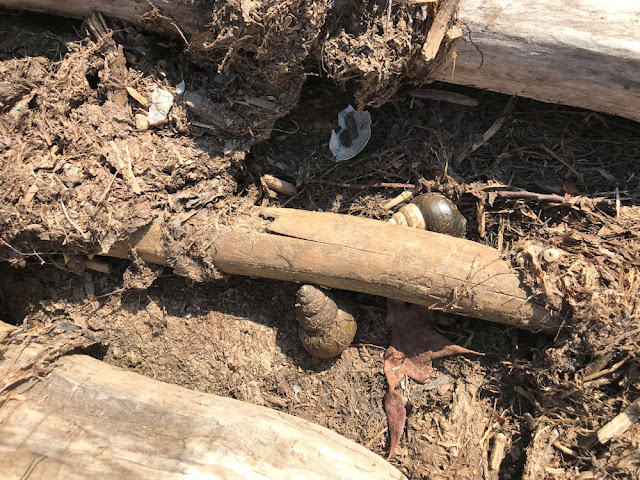
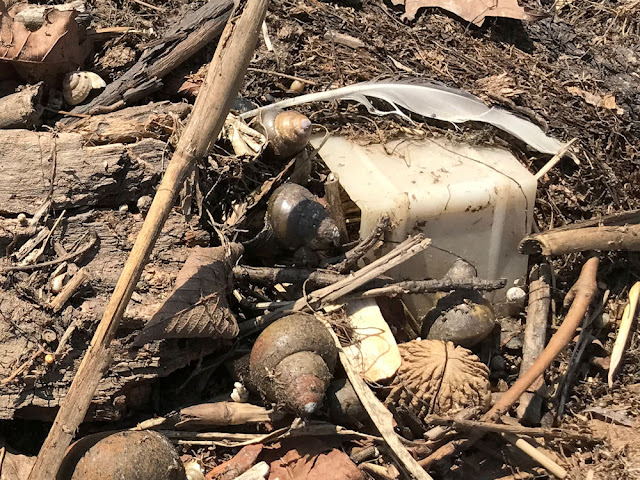
“By perseverance the snail reached the ark.”
Not a lot today, a little garden art.


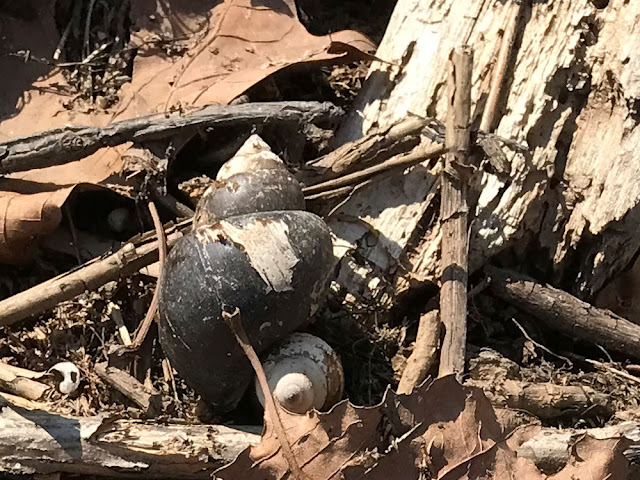
The snails reminded me of a quote in my collection which now, because of these photos, I can use.
"Even a snail will eventually reach its destination."

Ms. Tsukiyama is an American novelist born in San Francisco, California, to a Japanese father and a Chinese mother. She attended San Francisco State University, where she received both her Bachelor of Arts Degree and a Master of Arts Degree in English, with an emphasis in creative writing.

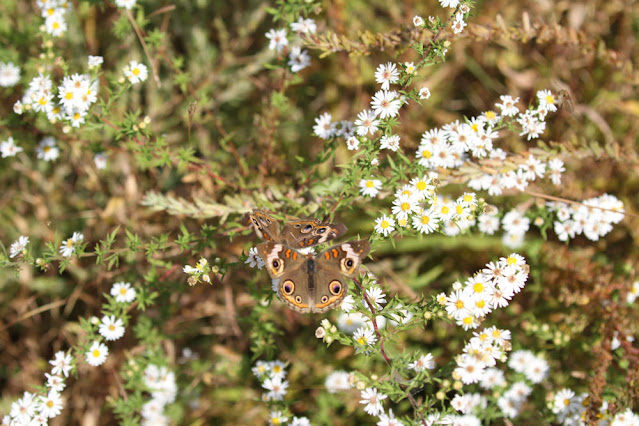
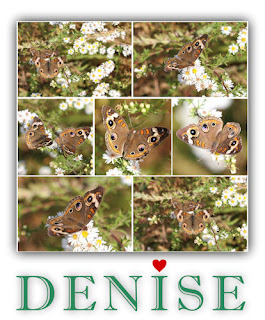
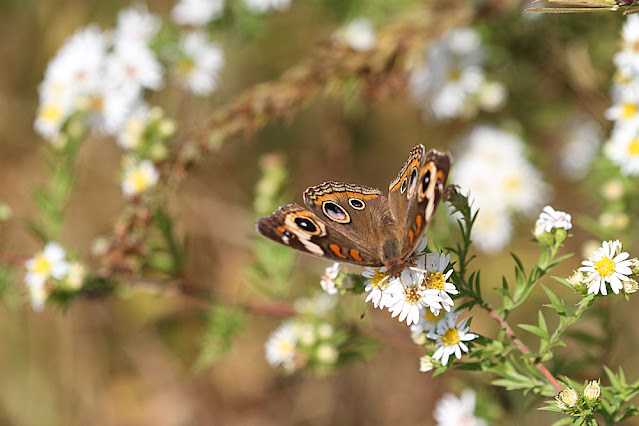
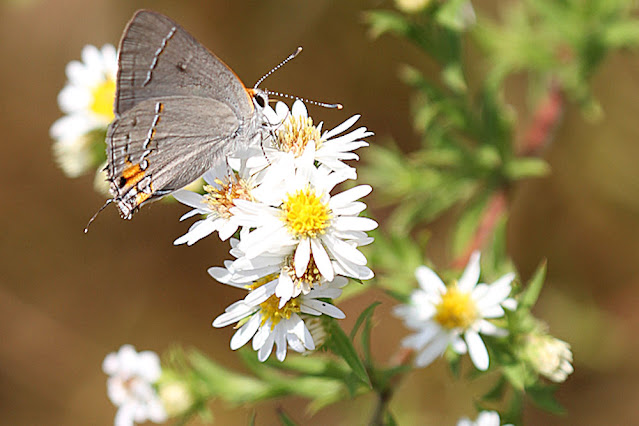
Gregg took photos of the pair.

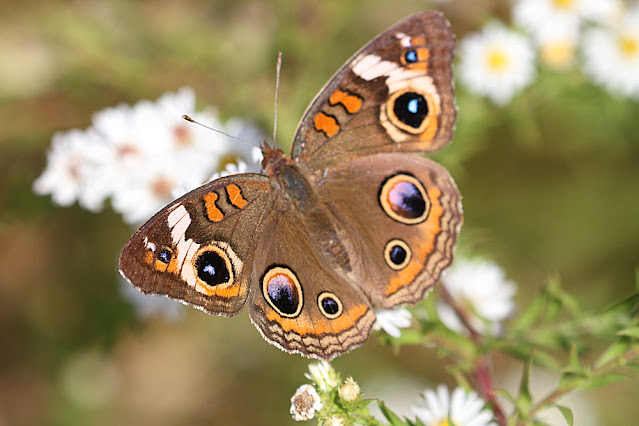
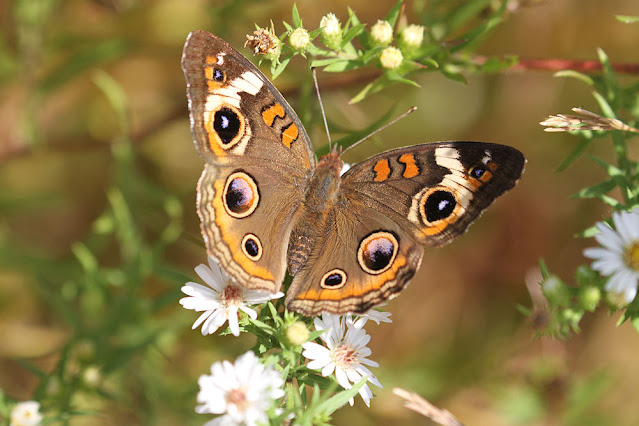 Named for its conspicuous target-shaped eyespots, the common buckeye, Junonia coenia Hübner, is one of the most distinctive and readily-identifiable North American butterflies.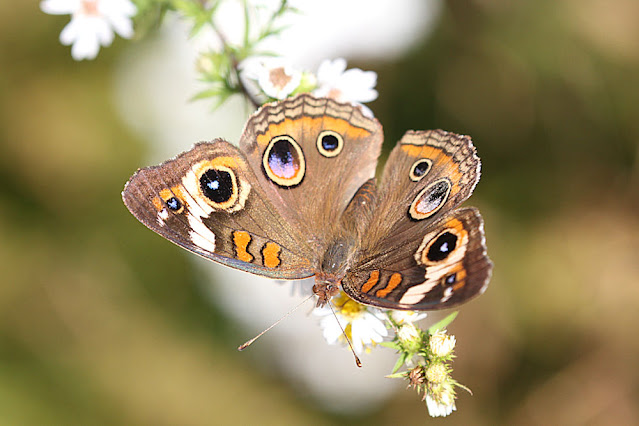

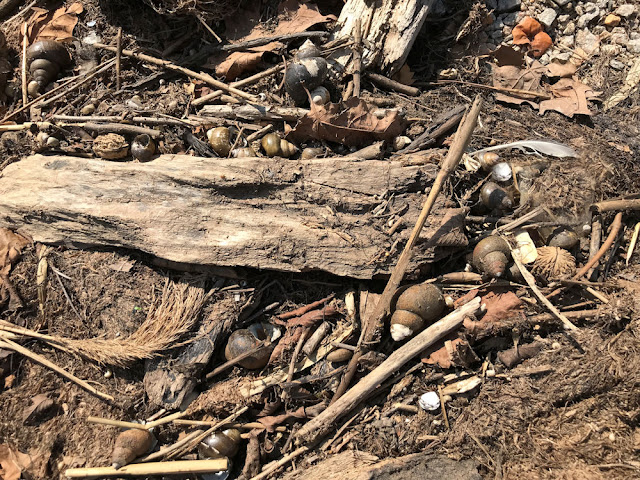
These snails can close their shells with something akin to a trap door, and survive out of the water for as long as a month. The snails feed on the algae growing on the river bottom, yet they excrete very little of the pollutants phosphorus and ammonium. In their tissue the snails concentrate spilled oil and other toxins, a trait that makes them potentially valuable as tipsters on pollution. When water temperatures rise above 59 degrees, a female snail starts giving birth to quarter-inch-long juvenile snails, a hundred at a time. If pressured by predators she can reproduce at twice the normal rate.
Females live for about five years, males for three. They retreat to deep waters for the winter where they hibernate in the mud. They were introduced by merchants and sailors to the West Coast in the 1890s, for the Asian food markets. They are native to Burma, Thailand, South Vietnam, China, Korea, the Phillipines and Java. By 1911 the snails had escaped to California irrigation ditches.
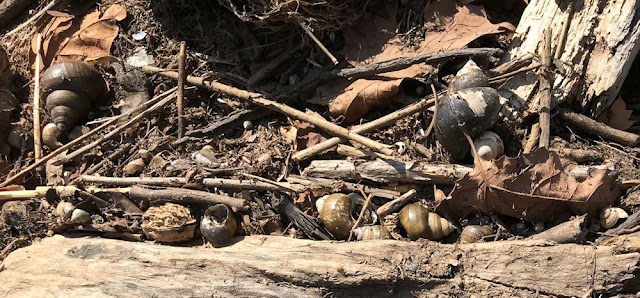
Later they were introduced in at least 27 states, especially in the northeast and the Great Lakes region, and now can be found in the Potomac River. Demands for food, aquarium and water-garden markets helped distribute the snails across the country. By 1960 mystery snails had found a haven in the Potomac River at Alexandria.
More information than is needed I am sure for this blog post, but I wanted to add this as I find it fascinating and always want a record of everything that peaks my curiosity.
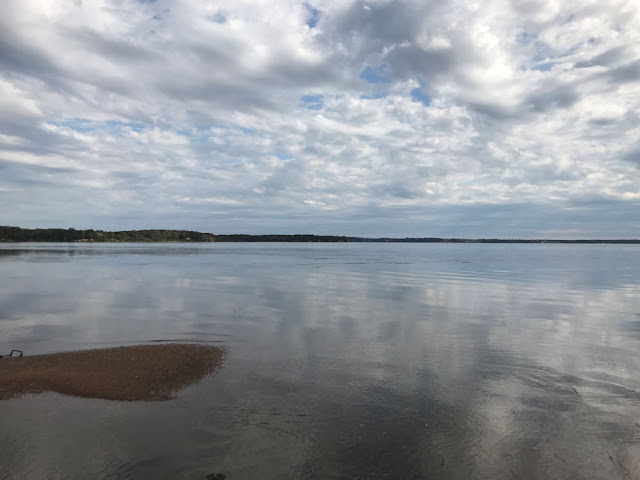
Sadly the beach along the river is littered with plastic bottles and other debris that is washed ashore from all over. I read on someone's blog that each time they visit this area, they take along a rubbish bag. I thought what a good idea! I know it seems that one person can't do much, but the next time we took a walk there I would like to bring along our own. To my mind every little helps and I would feel a whole lot better doing my small part.
So, that's it for today. I will be sharing Part 3 next time.
Thanks so much for visiting and I hope your day is a great one.