We don't always have the opportunity to read the historical markers we come across. Many we pass while driving, and also traffic sometimes prevents us from stopping. There is not always a place to park your car. This time I was only able to get a quick photo as we headed out of town and after we had looked at the log cabins we found earlier.

Later I looked it up and came across a website with information on those in three of the south eastern counties, and the one in the photo above. It reads:

"Royal Governor William Berkeley, owner of nearby Green Spring Plantation, purchased the land here by 1652, then known as Hot Water. After Berkeley's death, the Hot Water tract passed to the Ludwell and Lee families. William Ludwell Lee inherited the property in 1796 and died in 1803.

Lee's Will specified that his slaves be freed when they reached the age of 18. They were allowed to live on the property for ten years at no charge, and "comfortable houses" were to be built upon the tract for them. Lee's philanthropy gave rise to one of Virginia's early free black settlements located at Centerville."
There is also a very interesting article here.

We came across the small community on our last visit to Williamsburg, our original intent to visit the botanical garden and not knowing about this place beforehand. When we exited the garden we walked back to where we had parked our car.


We came across the small community on our last visit to Williamsburg, our original intent to visit the botanical garden and not knowing about this place beforehand. When we exited the garden we walked back to where we had parked our car.


It was very quiet. We were the only people there.


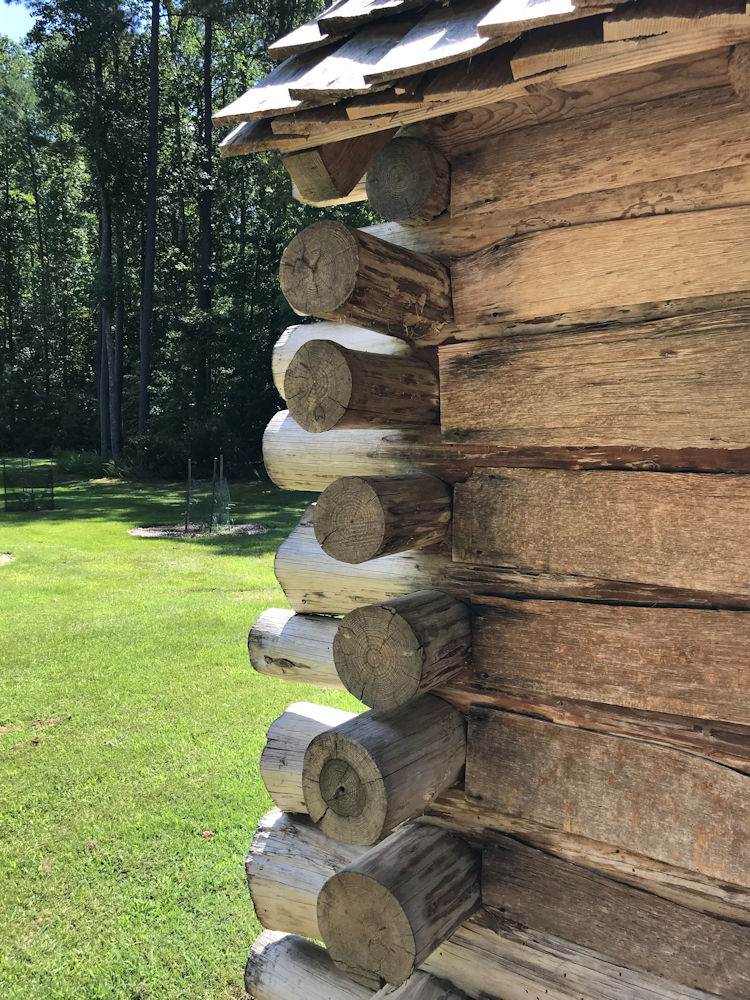

When we stepped inside the doorways, we were blocked from going all the way inside by sheets of plastic from floor to ceiling, so you will see reflections in some of these photos.


I'm assuming this interesting structure is a chicken coop.


I have added the map showing where Freedom Park is in relation to the Colonial Williamsburg Historical Area. As we left the Williamsburg Botanical Garden (also located in Freedom Park) we turned left out of the gate, and then right. It was a short walk up that road where we had parked the car in a parking lot on the left. At the end of that parking lot is the sign, Free Black Settlement. We followed the arrow and it wasn't too far before we found the community, another short walk.
Thank you for looking and enjoy your day.


