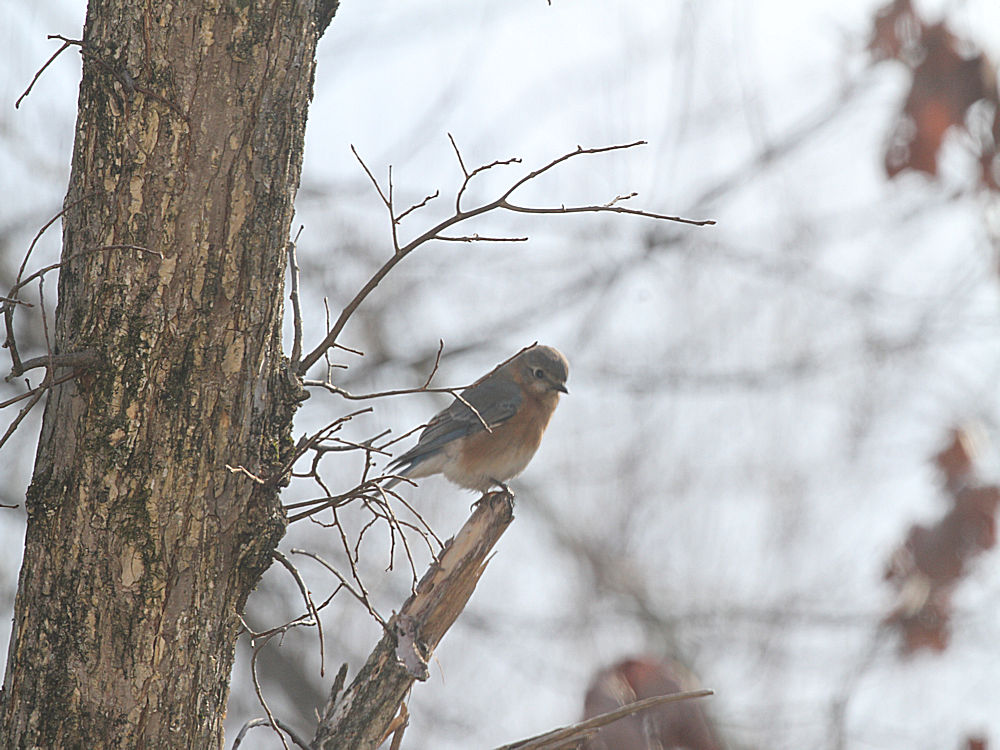
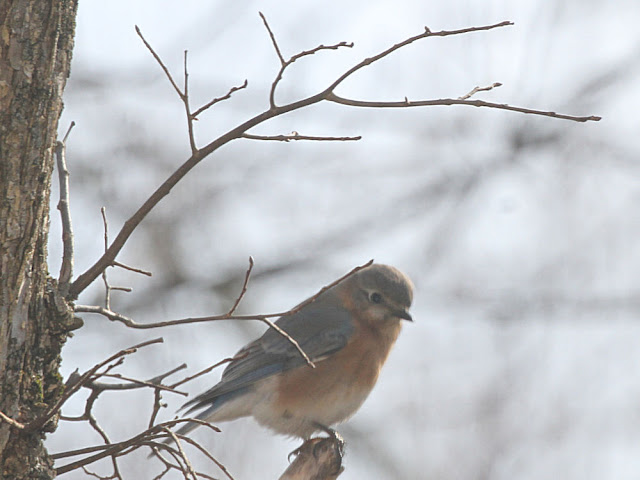
It wasn't so long ago that we rarely got to see an Eastern Bluebird. There were rare glimpses in other places but not in our garden. I was delighted the first time my trail cam (or as I prefer to call it now, my bird cam) started taking photos of what I thought couldn't be. But yes, they started being regular visitors about a year-and-a-half year ago. I haven't gotten over this yet, it is still a novelty and I suspect always will be. My photos were taken with our regular camera on a bit of a dull day and weren't as sharp as I would like. They were high in the tree and even my zoom lens was struggling, but it's a good photo memory.
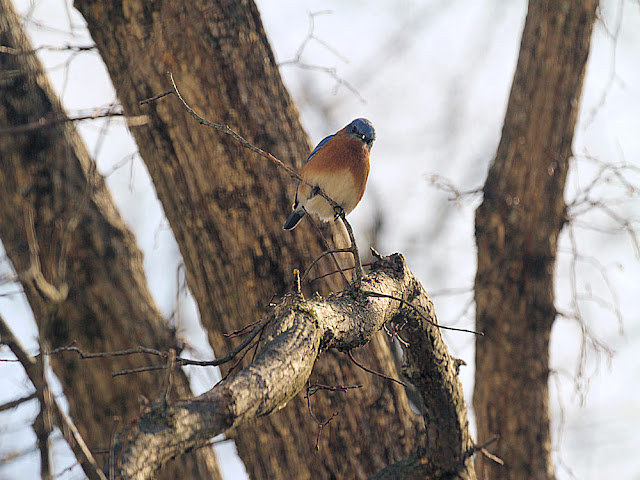
Here are a few facts about them. Eastern Bluebirds live in most of the United States east of the Rocky Mountains, and in parts of Southern Canada. There are also native populations of Eastern Bluebirds living in Mexico and Central America. Those that survive to adulthood can live for 6-10 years. That’s unusually long for a wild bird to live, but sadly most bluebirds do not survive their first year of life. Once they have mated and built their nest, a female bluebird will lay between three to five eggs. The female incubates them while the male brings her food. It takes about two months for Eastern Bluebirds to become fully independent. After about 22 days the chicks will be fledged, meaning they will have lost their downy feathers. That's when they begin to learn how to fly, but it takes a while longer for them to learn all the skills they need to survive on their own. 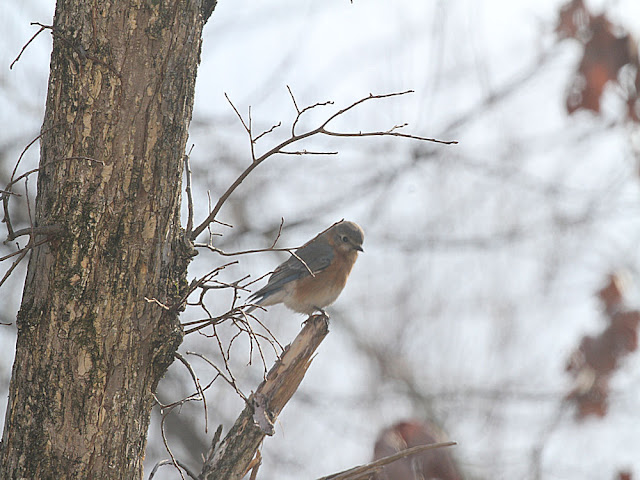
Females will never turn bright blue, instead staying a dull blue-gray their whole lives. Males will begin to develop bright blue feathers when they are around 13-14 days old, but it may be several days after that before they begin to show adult coloration over their whole body. Eastern Bluebirds are small and have trouble creating their own nests. They prefer to find old nests made by other species and reuse them, rather than building one. Old woodpecker holes are favorite nesting sites, and they prefer their nests to be near open fields and meadows, and often like to nest high off the ground. Because their preference is to find nesting sites made by other birds, they will readily take to birdhouses. They like to nest in tight, snug spaces, so smaller birdhouses are more likely to attract them. In some places people have built “bluebird trails”, areas with large numbers of nesting boxes for bluebirds to create ideal bird watching conditions.
Do Eastern Bluebirds migrate? Yes and no! In most of their range, Eastern Bluebirds don't migrate. However, there are large areas where they do. In the northernmost areas of their range in the United States, Eastern Bluebirds are present during the breeding season only, and in large portions of Texas, New Mexico and Northern Mexico are wintering grounds for these migrating bluebirds. In the southeastern US, Central Mexico and Central America they do not migrate.
I hope you have enjoyed these facts about one of my favorite birds. I had an enjoyable time finding out about them and am always up for a refresher course as I do forget certain things after a while.
Happy Wednesday everyone and thank you for stopping by.